.png)
Why Do Bad Things Happen to Good People?

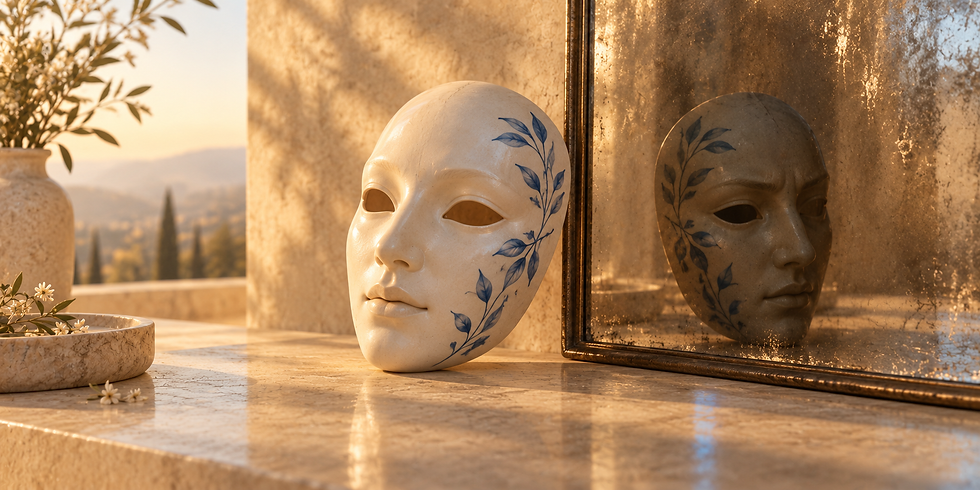
The Spiritual Reason Bad Things Happen to Good People
It is one of life’s most frustrating questions: Why do bad things happen to good people?
We see someone who appears generous, caring, and endlessly willing to help others—yet trouble seems to follow them everywhere. They experience betrayal, loss, conflict, or one painful situation after another. From the outside, it can seem deeply unfair.
“They’re such a good person,” we say. “Why does this keep happening to them?”
But according to Master Hien, the answer may be more complicated than what we can see.
Human beings judge goodness by actions. The spiritual world, however, does not see only what a person does. It also sees why they do it.
And sometimes, what looks good on the surface may be hiding something entirely different underneath.
What We See Isn’t Always the Whole Story
Imagine someone who is constantly helping people. They offer advice, solve problems, provide protection, and appear whenever someone needs them. Naturally, everyone around them may consider them a wonderful person.
But what if their kindness comes with invisible strings attached?
What if they help because they want control, loyalty, praise, influence, or something they can use later? What if they protect someone today while quietly planning to manipulate that person tomorrow?
From the human point of view, we see the helpful action. We may praise it, share it, or even wish more people behaved that way.
According to Master Hien’s spiritual understanding, however, the action is only one part of the story. The intention held within the heart and mind also matters.
A person may perform a good deed while carrying a harmful motive—and although that motive may remain hidden from other people, it is not hidden from the spiritual world.
A Good Deed and a Good Intention Are Not Always the Same
Most of us have been taught to judge people by their behavior. Someone gives, volunteers, protects others, or makes generous promises, so we assume they must be good.
But is every good deed automatically spiritually good?
Master Hien teaches that an action must agree with natural spiritual laws to create genuine merit and virtue. The appearance of kindness alone is not enough. The intention behind that kindness must also be sincere.
Consider the difference between these two situations:
One person helps because they genuinely want another person to be safe and well. They do not demand attention, repayment, control, or public recognition.
Another person offers the same help—but privately expects loyalty, admiration, access, or power in return.
From the outside, the actions may look identical. Spiritually, Master Hien believes they are not the same at all.
The human eye sees the favor. The spiritual side sees the motive.
When Someone’s Public Image and Private Heart Don’t Match
People can carefully control what they allow others to see.
A person may speak beautifully about kindness while treating people poorly in private. They may protect one individual while harming another. They may appear generous in public but become resentful when their generosity does not earn them the response they expected.
This is why popularity, praise, and a reputation for being “good” do not always reveal a person’s true spiritual condition.
According to Master Hien, karma is not based on someone’s public image. It is connected to the person’s actions, intentions, responsibilities, and choices—including the parts of themselves they successfully hide from everyone else.
Other people might be fooled by appearances. Spiritual law is not.

Does This Mean Every Hardship Is a Punishment?
No. Every human life contains uncertainty, disappointment, grief, and change. Even a genuinely kind person may experience difficult days, painful losses, or circumstances beyond their control.
Master Hien’s teaching should not be interpreted to mean that every illness, accident, financial struggle, or tragedy proves that a person has done something wrong. We cannot look at a single painful event and claim to understand another person’s entire karma or destiny.
The distinction is important.
Normal hardship is part of being human. A repeated pattern of serious spiritual harm, however, may have deeper causes that are not visible from the outside.
Master Hien teaches that a truly good person who lives in harmony with spiritual laws develops merit and virtue. That does not promise a life without problems, but those spiritual qualities may offer protection from certain harmful forces and prevent some situations from becoming much worse.
Merit does not necessarily remove every storm. Sometimes, it changes how strongly the storm can reach you.
Merit and Virtue as Spiritual Protection
In Master Hien’s teachings, merit and virtue are more than rewards for behaving nicely. They become a form of spiritual strength and protection.
Merit is not created simply by being seen doing good things. It develops through sincere actions, honest intentions, personal responsibility, and choices that do not secretly harm or manipulate others.
Virtue is also revealed by what someone does when there is no audience.
How do they treat people who cannot benefit them? Do they still help when no one will praise them? Are they willing to do the right thing when doing so is inconvenient? Can they give without trying to own the person who receives?
These quieter moments may reveal far more about someone than their most impressive public acts.
Look Beyond the Favor
This teaching does not mean we should become suspicious of every kind person or assume every offer of help is a trap. It means we should pay attention to patterns instead of becoming blinded by a single generous action.
When someone helps you, notice what follows.
Do they respect your freedom afterward, or do they begin trying to control your decisions? Do they remind you constantly of what they did? Does their kindness disappear when you establish a boundary? Do they help only when there is something to gain?
Real kindness does not need to trap its recipient.
A sincere person may appreciate gratitude, but they do not use their help as a weapon. They do not turn generosity into a debt that gives them permission to control your life.
Time often reveals what appearances cannot.
We Cannot See Another Person’s Entire Karma
When painful things repeatedly happen to someone we admire, it is easy to believe the universe—or heaven—must be treating them unfairly.
But Master Hien teaches that we are seeing only a small part of that person’s story. We do not know every past choice, private intention, spiritual connection, karmic responsibility, or element of their destiny.
That does not give us permission to condemn them. It reminds us to be humble about what we think we know.
We should have compassion for people who are suffering. At the same time, we should understand that a person’s visible behavior may not explain everything taking place beneath the surface.
Only seeing someone’s public goodness does not mean we can see their complete spiritual truth.
The Question We Should Ask Ourselves
Perhaps “Why do bad things happen to good people?” is not the only question worth asking.
We might also ask:
What does it truly mean to be good?
Is goodness something we display, or something we carry within us? Are we helping because it is right, or because we want something in return? Would we make the same choice if nobody ever knew about it?
According to Master Hien, spiritual laws look beyond appearances. They recognize the difference between performance and sincerity, between kindness and manipulation, and between a good reputation and a genuinely good heart.
We may be able to hide our motives from other people. We may even hide them from ourselves for a while.
But eventually, our intentions become part of the karma we create.
And perhaps that is the deeper lesson: being seen as a good person is not the same as truly becoming one.
CONTINUE THE JOURNEY
Receive Master Hien's teachings, articles, and book updates.


Comments